
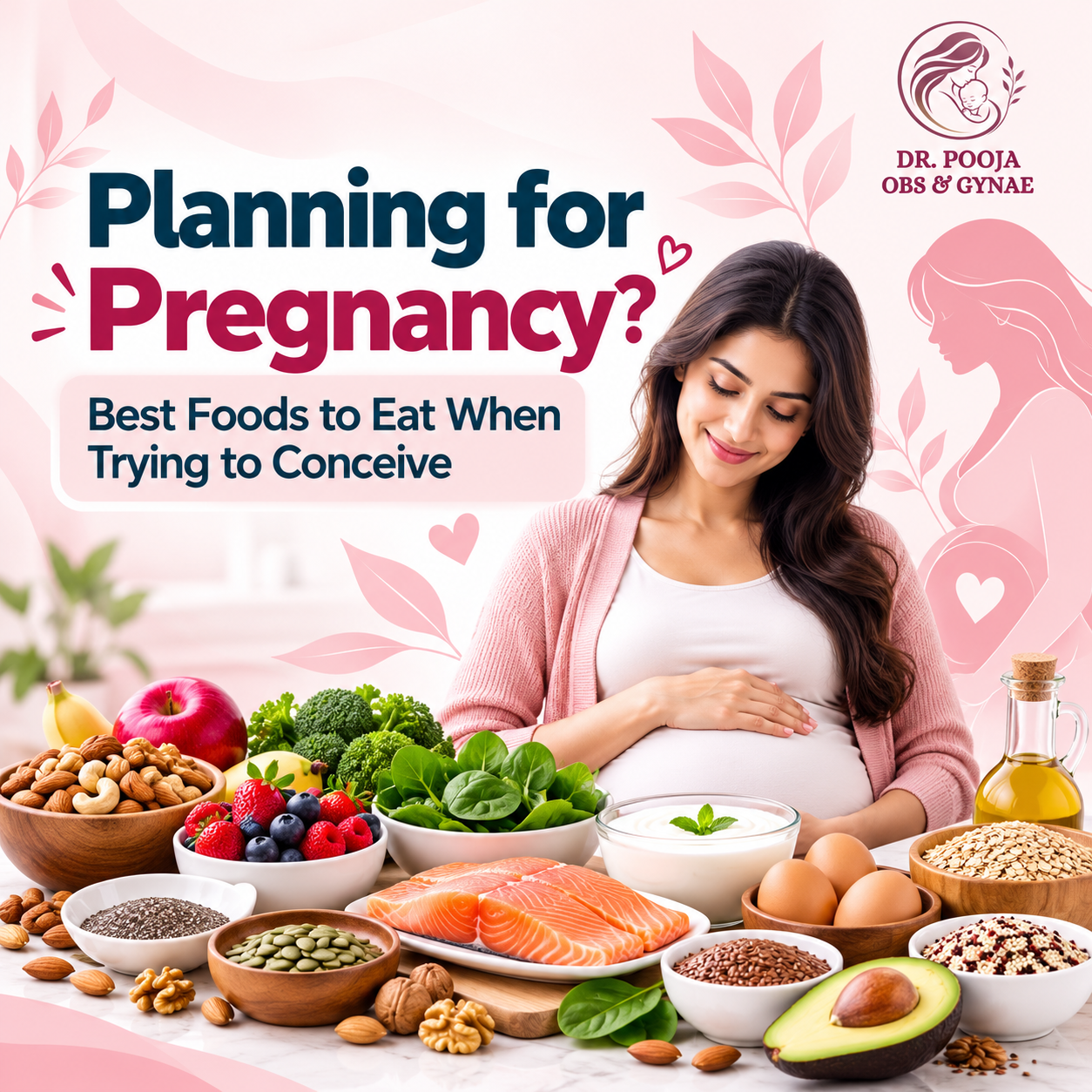
Are you planning to get pregnant and wondering what foods you should eat to prepare your body for pregnancy?
A healthy diet plays an important role in reproductive health, hormone function and overall well-being. Whether you have just started trying to conceive or are preparing for pregnancy in the coming months, making healthy food choices can help support your body.
Many women have questions about the best foods for pregnancy planning, foods that support fertility and what to avoid when trying to get pregnant.
Dr. Pooja Choudhary, Obstetrician and Gynecologist, explains how everyday foods fit into a balanced pre-pregnancy diet.
Why Is a Healthy Diet Important When Planning Pregnancy?
Good nutrition is important before conception because your body needs essential vitamins, minerals, proteins and healthy fats to support reproductive health and early fetal development.
A balanced pre-pregnancy diet can help you:
Maintain overall nutritional health
Support normal hormonal and reproductive function
Build adequate nutrient stores before pregnancy
Maintain a healthy weight
Reduce the risk of certain nutritional deficiencies
However, no single food or diet can guarantee pregnancy. Fertility depends on several factors, including age, ovulation, sperm health and underlying medical conditions.
7 Best Foods to Eat When Trying to Conceive
1. Nuts and Seeds
Almonds, walnuts, pumpkin seeds, chia seeds and flaxseeds contain healthy fats, fibre and important micronutrients.
These foods can be included in a balanced diet when planning pregnancy.
Tip: Choose unsalted nuts and seeds in moderate portions.
2. Green Leafy Vegetables
Spinach, methi, broccoli and other green vegetables provide folate, fibre and essential nutrients.
Folate is especially important during early pregnancy because it supports normal neural tube development.
Women planning pregnancy are generally advised to take 400 micrograms of folic acid daily, beginning before conception, unless their doctor recommends a different dose.
3. Protein-Rich Foods
Protein supports normal tissue growth and overall health.
Healthy protein sources include:
Eggs
Lentils and dals
Beans and chickpeas
Paneer and tofu
Lean meat
Well-cooked fish
Include a variety of protein sources in your daily meals.
4. Fresh Fruits
Oranges, guava, apples, berries, bananas and other seasonal fruits provide vitamins, minerals and dietary fibre.
Vitamin C-rich fruits can also support the absorption of iron from plant-based foods.
Choose whole fruits regularly rather than relying on fruit juices.
5. Milk, Curd and Yogurt
Milk, curd and plain yogurt provide calcium and protein. Some dairy products also contain vitamin B12 and iodine.
These nutrients are important for overall health and preparation for pregnancy.
Choose pasteurised dairy products and limit varieties with large amounts of added sugar.
6. Whole Grains
Whole wheat roti, oats, brown rice and other whole grains provide fibre and energy.
They can support digestive and metabolic health as part of a balanced diet.
7. Low-Mercury Fish
Fish such as salmon and sardines provide protein and omega-3 fatty acids.
Omega-3 fats support overall health and are important during pregnancy.
Choose low-mercury varieties and avoid high-mercury fish when planning pregnancy.
Foods to Limit When Trying to Get Pregnant
You do not need to follow an extremely restrictive diet when planning pregnancy. However, some foods and drinks should be limited or avoided.
Coffee and Caffeine
You may not need to stop drinking coffee completely.
A practical precaution is to keep caffeine intake below 200 mg per day when trying to conceive, particularly because you may become pregnant before knowing it.
Remember that tea, chocolate and energy drinks may also contain caffeine.
French Fries and Fast Food
French fries, burgers and other fast foods can be enjoyed occasionally, but they should not replace nutritious meals.
Frequent consumption of highly processed foods may contribute to excess calorie, sodium and saturated fat intake.
Sugary Drinks and Sweets
Limit sugary drinks, packaged juices and sweets with high amounts of added sugar.
Choose water, whole fruits and balanced meals more often.
Alcohol
The safest approach is to avoid alcohol when trying to conceive because pregnancy may occur before it is recognised.
What Should You Eat Daily When Planning Pregnancy?
Here is an example of a balanced Indian pre-pregnancy meal plan.
| Meal | Food Options |
|---|---|
| Breakfast | Vegetable poha with curd or eggs with whole wheat toast |
| Mid-morning | Seasonal fruit and a handful of nuts |
| Lunch | Roti, dal, vegetables, curd and salad |
| Evening snack | Roasted chana or fruit |
| Dinner | Roti or rice with paneer, tofu, dal or well-cooked fish and vegetables |
This is a general example. Individual dietary requirements vary according to medical history, nutritional needs and food preferences.
Essential Nutrients Before Pregnancy
Certain nutrients deserve particular attention during pregnancy planning.
Folic Acid: Helps reduce the risk of neural tube defects. Most women should take 400 micrograms daily before conception and during early pregnancy.
Iron: Supports healthy red blood cells. Iron-rich foods include lentils, beans, leafy vegetables and meat.
Calcium: Supports bone health. Sources include milk, curd, paneer and fortified alternatives.
Vitamin B12: Important for nerve function and red blood cell formation, particularly for women following vegetarian or vegan diets.
Vitamin D: Supports bone health. Supplementation may be needed depending on individual circumstances.
Iodine: Supports thyroid function and early fetal development. Discuss appropriate intake with your doctor.
Can a Healthy Diet Improve Your Chances of Pregnancy?
Healthy eating supports reproductive and metabolic health, but it cannot guarantee conception.
If you have irregular periods, PCOS, thyroid disorders or other medical concerns, you may benefit from a preconception consultation.
A gynecologist can assess your health, review medications and recommend appropriate tests or supplements.
When Should You Consult a Gynecologist Before Pregnancy?
Consider a pre-pregnancy consultation if you:
Are planning to conceive
Have irregular menstrual cycles
Have PCOS, diabetes or thyroid problems
Have experienced previous pregnancy complications
Need advice about prenatal vitamins or folic acid
Have concerns about fertility
If you have been trying to conceive without success, fertility evaluation is generally recommended after 12 months if you are under 35, or after 6 months if you are 35 or older. Earlier evaluation may be appropriate when known risk factors are present.
Pregnancy Planning Consultation With Dr. Pooja Choudhary
If you are looking for a gynecologist in Indirapuram, Noida or Greater Noida for pregnancy planning, Dr. Pooja Choudhary provides obstetric and gynaecological consultations.
Preconception counselling can help you understand your nutritional needs, menstrual health, medical history and recommended preparations before pregnancy.
Website: https://drpoojachoudhary.in/
Book a consultation to discuss your pregnancy plans and receive personalised medical guidance.
Frequently Asked Questions
1. What are the best foods to eat when trying to get pregnant?
A balanced diet containing vegetables, fruits, whole grains, protein-rich foods, nuts, seeds and calcium-rich foods supports overall reproductive health.
2. Which fruit is best for pregnancy planning?
There is no single best fruit for fertility. Eating a variety of seasonal fruits provides different vitamins, minerals and antioxidants.
3. Can I drink coffee while trying to conceive?
Moderate caffeine consumption is generally acceptable, but keeping intake below 200 mg per day is a sensible precaution.
4. Should I take folic acid before pregnancy?
Yes. Most women planning pregnancy should take 400 micrograms of folic acid daily, ideally starting at least one month before conception. Some women need a higher prescribed dose.
5. Can I eat French fries while planning pregnancy?
Yes, occasionally. The focus should be on maintaining an overall balanced and nutritious eating pattern.
6. Does eating nuts improve fertility?
Nuts provide healthy fats and micronutrients, but there is insufficient evidence that eating nuts alone improves female fertility.
Conclusion
Planning for pregnancy is a good time to develop healthier eating habits.
Include nutritious foods such as fruits, vegetables, nuts, seeds, whole grains, protein-rich foods and yogurt. Limit highly processed foods and excessive caffeine, avoid alcohol and take recommended folic acid supplements.
Remember, healthy pregnancy planning is about consistency and balance, not following a perfect diet.
For personalised pregnancy planning advice, consult Dr. Pooja Choudhary.