
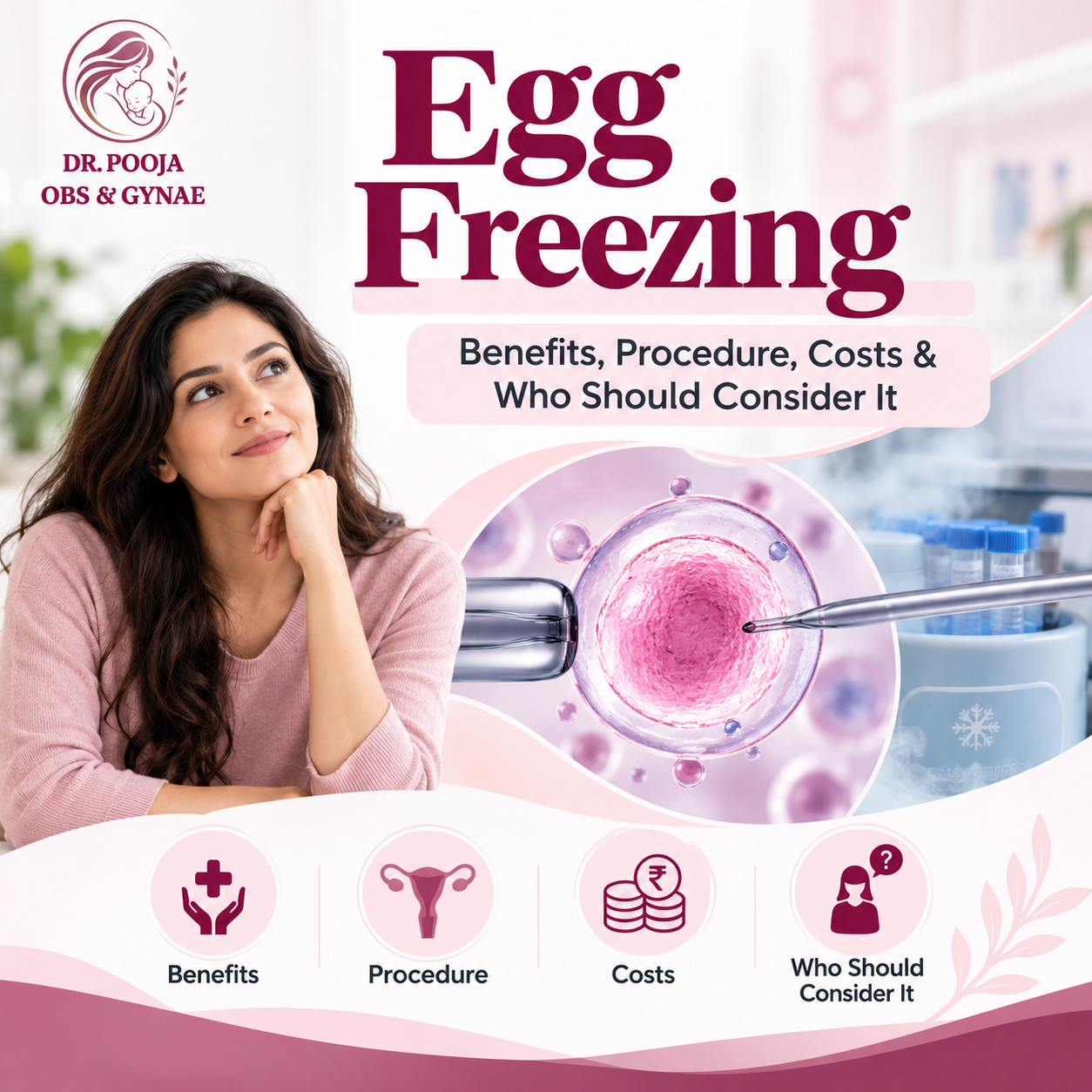
Egg freezing, medically known as oocyte cryopreservation, is a fertility preservation technique that allows women to freeze and store their eggs for possible future use. It may be an option for women who wish to delay pregnancy, are undergoing certain medical treatments or want to preserve their fertility for personal or medical reasons.
Although egg freezing can provide additional reproductive options, it does not guarantee a future pregnancy. Understanding the procedure, benefits, limitations and costs can help you make an informed decision.
What Is Egg Freezing?
Egg freezing involves collecting mature eggs from the ovaries and preserving them at very low temperatures. If a woman decides to use her frozen eggs in the future, they are thawed, fertilized with sperm in a laboratory and the resulting embryo may be transferred to the uterus.
The chances of success depend on several factors, particularly the woman's age when the eggs are frozen and the number and quality of eggs stored.
Benefits of Egg Freezing
Egg freezing may offer several potential benefits:
Fertility preservation: It provides an option for women who wish to postpone pregnancy.
Medical reasons: It may be considered before certain cancer treatments or other medical procedures that could affect fertility.
Personal flexibility: It can provide more reproductive options for women who are not ready to conceive.
Future family planning: It allows eggs collected at a younger age to be stored for potential future use.
However, egg freezing cannot completely prevent age-related fertility changes or guarantee a baby in the future.
Who Should Consider Egg Freezing?
Egg freezing may be worth discussing with a fertility specialist if you:
Plan to delay pregnancy for several years
Are concerned about age-related changes in fertility
Need certain medical treatments that may affect ovarian function
Have a medical condition that could reduce ovarian reserve
Want to understand your fertility preservation options
The decision should be based on your age, medical history, reproductive goals and personal circumstances.
How Does the Egg Freezing Procedure Work?
The process generally involves several stages:
1. Fertility Assessment: Your doctor reviews your medical history and may recommend blood tests, including AMH, and an ultrasound to assess ovarian reserve.
2. Ovarian Stimulation: Hormonal medications are used to encourage the ovaries to develop multiple eggs.
3. Egg Retrieval: Mature eggs are collected through a procedure performed under appropriate sedation or anesthesia.
4. Freezing and Storage: Suitable mature eggs are frozen using a technique called vitrification and stored for future use.
The timing and response to treatment vary from person to person.
What Is the Cost of Egg Freezing in India?
The cost of egg freezing varies depending on the fertility clinic, medication requirements, laboratory services and storage duration. The initial procedure may cost approximately ₹1 lakh to ₹2.5 lakh or more, while medications and annual storage charges may be additional.
These figures are indicative only. Ask the fertility clinic for a complete, current estimate covering consultation, testing, medicines, egg retrieval, freezing, storage and future use of the eggs.
Consult a Fertility Specialist Before Deciding
Egg freezing is an important personal decision. A fertility consultation can help you understand the potential benefits, limitations, costs and realistic chances of future success based on your individual circumstances.
Dr. Pooja Choudhary, an experienced Obstetrician and Gynecologist, provides women's healthcare and fertility-related consultations at Gaur City 2, Noida Extension and Indirapuram, Ghaziabad.
If you are considering egg freezing or want to understand your ovarian reserve, seek professional guidance to explore suitable fertility preservation options.