
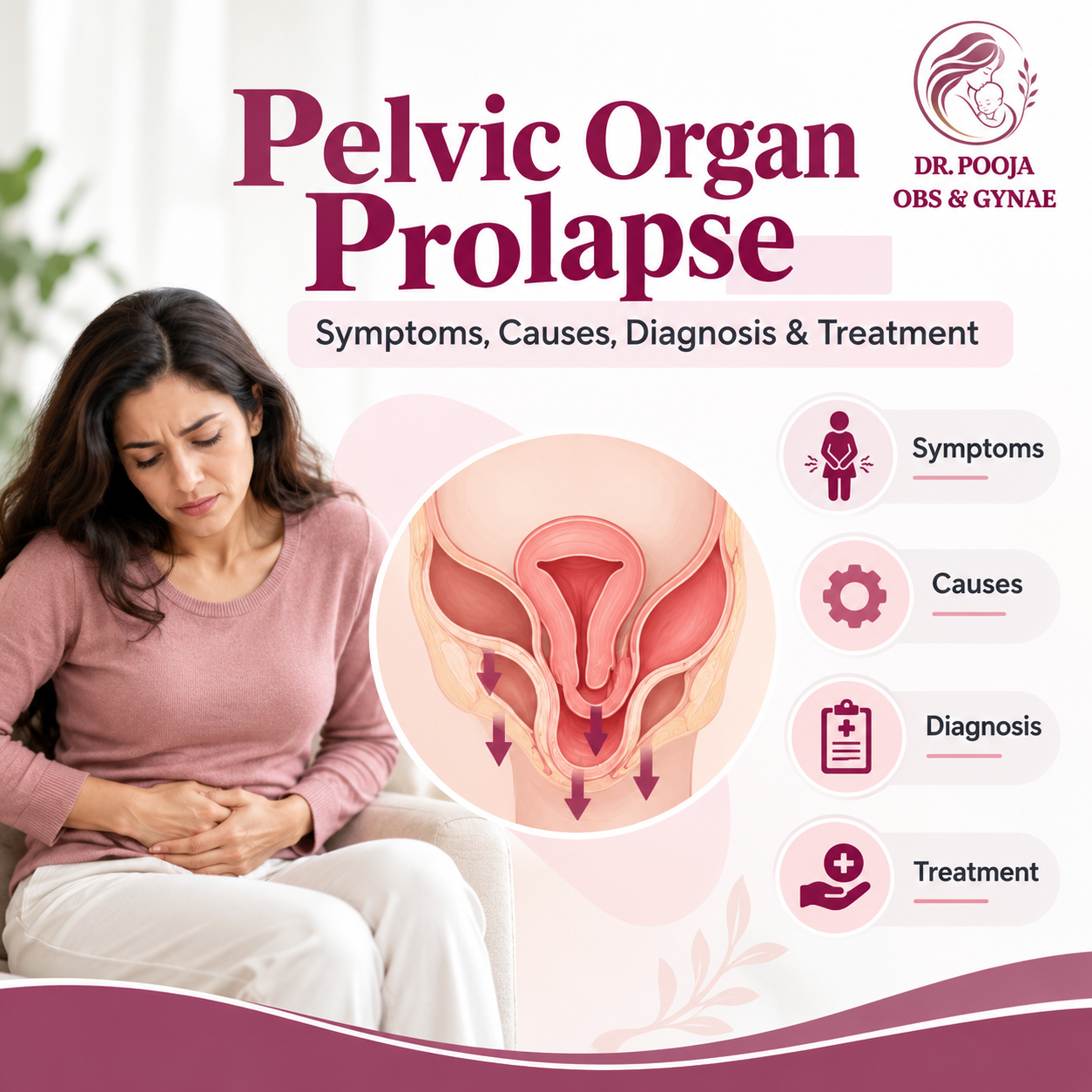
Pelvic Organ Prolapse (POP) is a condition in which one or more pelvic organs, such as the bladder, uterus or rectum, descend from their normal position due to weakened pelvic floor muscles and supporting tissues. It can cause pelvic pressure, discomfort and changes in bladder or bowel function.
Although pelvic organ prolapse is more common after childbirth and with increasing age, effective treatment options are available. Early consultation with a gynecologist can help women understand their condition and choose suitable care.
Common Symptoms of Pelvic Organ Prolapse
Symptoms vary depending on the type and severity of prolapse. Common signs include:
A feeling of heaviness or pressure in the pelvis
A bulge or lump in the vagina
Discomfort while standing or walking for long periods
Difficulty emptying the bladder completely
Urinary leakage or frequent urination
Constipation or difficulty passing stool
Discomfort during sexual intercourse
Some women may have mild prolapse without noticeable symptoms.
What Causes Pelvic Organ Prolapse?
Pelvic organ prolapse develops when the muscles and connective tissues supporting the pelvic organs become weakened or stretched. Contributing factors may include:
Pregnancy and vaginal childbirth
Increasing age and menopause
Chronic constipation and repeated straining
Persistent coughing
Being overweight
Previous pelvic surgery
Genetic factors affecting tissue strength
Having one or more risk factors does not necessarily mean that prolapse will develop.
How Is Pelvic Organ Prolapse Diagnosed?
A gynecologist usually reviews your symptoms and medical history before performing a pelvic examination. The examination helps assess which organs are affected and how severe the prolapse is.
Additional tests may be recommended if you have urinary problems, bowel symptoms or other concerns. Your doctor will determine whether further evaluation is necessary.
Treatment Options for Pelvic Organ Prolapse
Treatment depends on the severity of symptoms, the type of prolapse, your overall health and personal preferences.
Pelvic Floor Exercises: Guided pelvic floor muscle exercises, often called Kegel exercises, may help improve muscle strength and support.
Lifestyle Changes: Managing constipation, avoiding excessive straining and maintaining a healthy weight may help reduce pressure on the pelvic floor.
Vaginal Pessary: A removable device placed inside the vagina can support the pelvic organs and help relieve symptoms.
Surgical Treatment: Surgery may be considered when symptoms are significant or other treatments do not provide sufficient relief. The appropriate procedure depends on the individual condition and treatment goals.
Not every woman with pelvic organ prolapse needs surgery.
When Should You Consult a Gynecologist?
Do not ignore persistent pelvic pressure, a vaginal bulge, difficulty passing urine or ongoing bowel problems. A timely gynecological assessment can help identify the cause and determine the most appropriate treatment.
Consult Dr. Pooja Choudhary in Noida & Ghaziabad
Dr. Pooja Choudhary, an experienced Obstetrician and Gynecologist, provides comprehensive women's healthcare and gynecological consultations at Gaur City 2, Noida Extension and Indirapuram, Ghaziabad.
If you are experiencing symptoms of pelvic organ prolapse, consult a qualified gynecologist for proper evaluation and personalized treatment guidance. Early assessment can help you understand your options and improve your quality of life.