

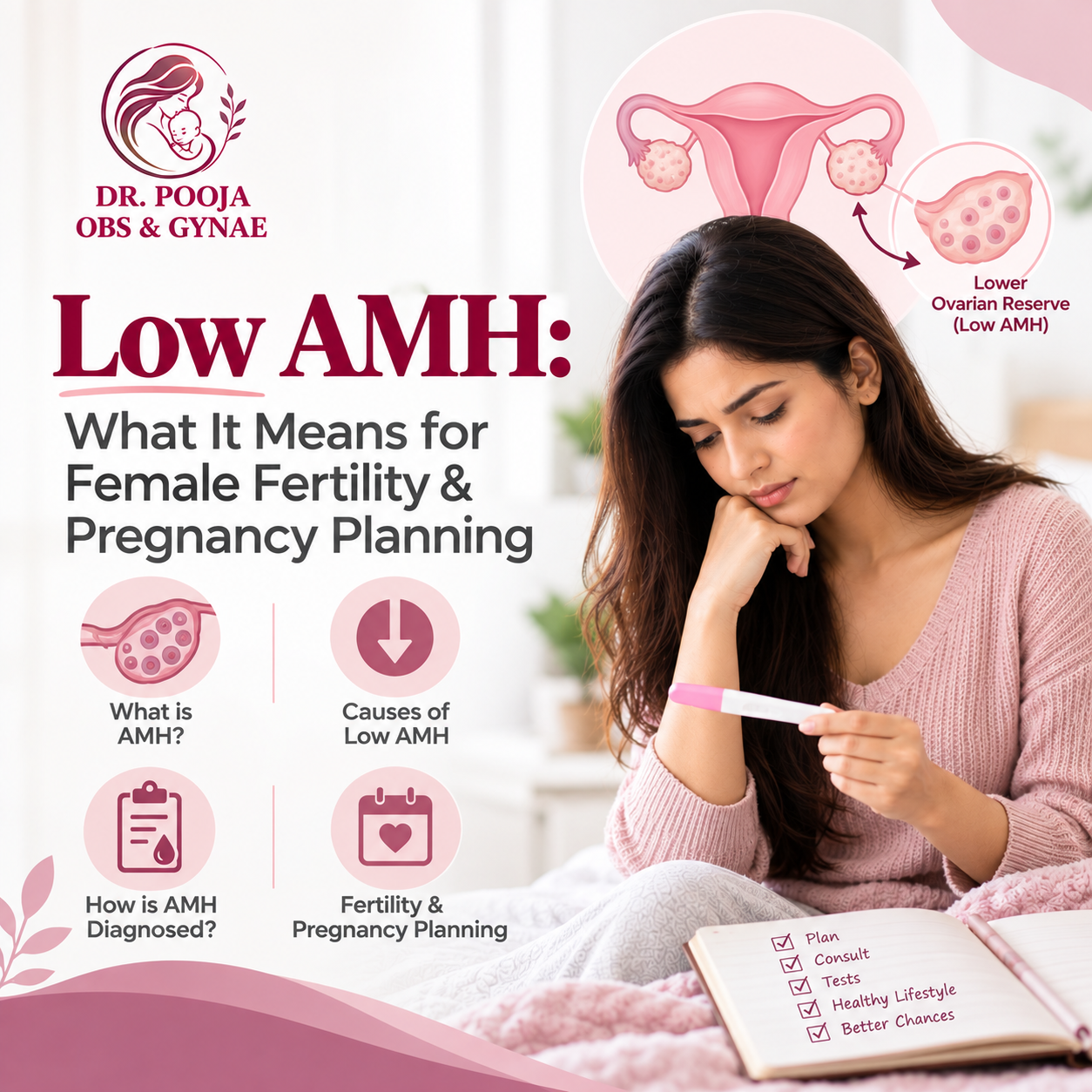
Anti-Müllerian Hormone (AMH) is a hormone produced by the small follicles in the ovaries. An AMH blood test is commonly used as one of the markers of ovarian reserve, which refers to the remaining quantity of eggs in the ovaries.
A low AMH level can provide useful information about ovarian reserve, but it does not by itself mean that pregnancy is impossible.
What Does Low AMH Mean?
AMH levels generally decrease with age. A lower-than-expected AMH level may indicate a reduced ovarian reserve. However, AMH does not directly measure egg quality and cannot predict pregnancy on its own.
A woman's fertility depends on several factors, including age, ovulation, egg quality, sperm health, fallopian tube condition and the health of the uterus.
Therefore, AMH results should always be interpreted along with other fertility assessments.
What Can Cause Low AMH?
AMH naturally declines with age, but other factors may also be associated with lower ovarian reserve, including:
- Increasing age
- Previous ovarian surgery
- Certain medical treatments
- Some ovarian conditions
- Individual differences in ovarian reserve
In some women, the reason for a lower AMH level may not be clear.
Does Low AMH Affect Pregnancy?
Low AMH may indicate a lower ovarian reserve, which can be important when planning pregnancy, particularly as age increases. It may also affect the number of eggs that can potentially be obtained during fertility treatment.
However, low AMH does not mean you cannot conceive naturally. Some women with low AMH conceive without fertility treatment.
The best approach depends on your age, fertility history, menstrual pattern and other test results.
How Is Low AMH Evaluated?
A gynecologist or fertility specialist may recommend a comprehensive fertility assessment. Depending on your individual situation, this may include:
- AMH blood test
- Antral follicle count through ultrasound
- Assessment of ovulation
- Other hormone tests when appropriate
- Evaluation of the uterus and fallopian tubes
- Semen analysis for the male partner
These tests help provide a more complete picture of fertility rather than relying on AMH alone.
Pregnancy Planning With Low AMH
If you have been told that your AMH is low and you are planning a pregnancy, avoid unnecessary delay in seeking professional advice. Your doctor can assess your overall fertility and discuss suitable options based on your individual circumstances.
Depending on the assessment, options may include natural conception with appropriate guidance, ovulation-related treatment, IUI or IVF when clinically appropriate.
When Should You Consult a Fertility Specialist?
Consider a fertility consultation if you have been diagnosed with low AMH, have been trying to conceive without success, have a history of ovarian surgery, or are concerned about your future fertility.
Early evaluation can help you understand your reproductive options and make informed decisions about pregnancy planning.
Consult Dr. Pooja Choudhary in Noida & Ghaziabad
Dr. Pooja Choudhary, an experienced Obstetrician and Gynecologist, provides comprehensive women's healthcare and fertility-related consultations at Gaur City 2, Noida Extension and Indirapuram, Ghaziabad.
If you have concerns about low AMH, ovarian reserve or pregnancy planning, a personalized fertility evaluation can help you understand your options and plan the next steps.