
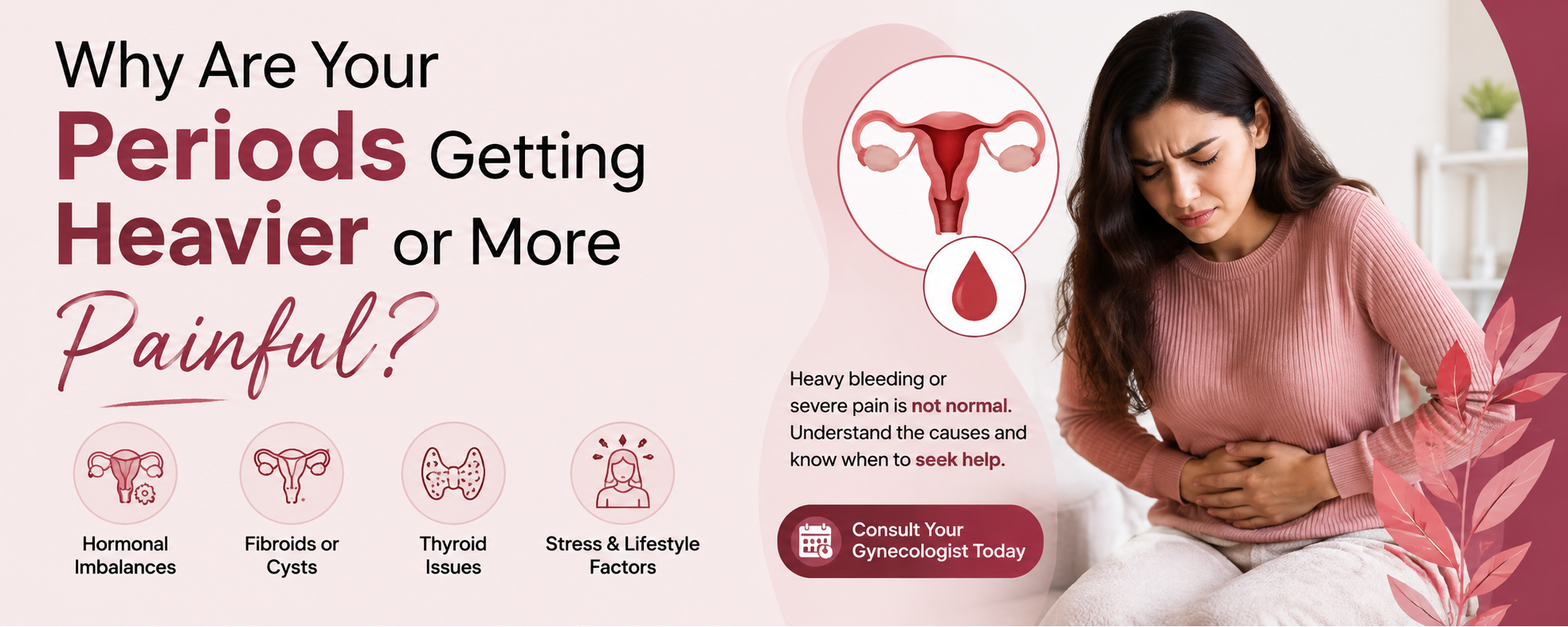
Period pain and bleeding can vary from woman to woman. Some discomfort during menstruation is common, but a noticeable change in your usual period pattern should not always be dismissed as “normal.”
If your periods have suddenly become heavier or more painful, there may be an underlying reason.
What causes heavy periods?
Heavy menstrual bleeding can sometimes occur because of hormonal changes, particularly when ovulation is irregular. Other possible causes include fibroids, adenomyosis, endometriosis, thyroid problems or certain blood-related conditions.
Sometimes, the cause may not be immediately obvious and requires evaluation by a gynaecologist.
What causes severe period pain?
Mild cramps can happen because the uterus contracts during menstruation. However, severe or worsening period pain may sometimes be associated with conditions such as endometriosis, adenomyosis or fibroids.
Pain that prevents you from going to work, attending college, sleeping normally or carrying out everyday activities deserves medical attention.
Signs you shouldn't ignore
Consider speaking to a gynaecologist if you notice:
Periods becoming significantly heavier than before
Bleeding that lasts unusually long
Severe or worsening cramps
Large blood clots along with heavy bleeding
Pain between periods
Pain during sexual intercourse
Unusual fatigue or weakness
Heavy bleeding can sometimes contribute to iron-deficiency anaemia, which may cause tiredness, weakness or breathlessness.
What can a gynaecologist do?
Your doctor may ask about your menstrual history and symptoms and may recommend tests or an ultrasound when appropriate. Treatment depends entirely on the underlying cause and may include medicines or other treatment options.
Your period pain deserves attention
You know your normal cycle better than anyone. If your bleeding or pain has changed significantly, don't simply learn to live with it.
A consultation with a gynaecologist can help identify the cause and guide you towards appropriate treatment.