
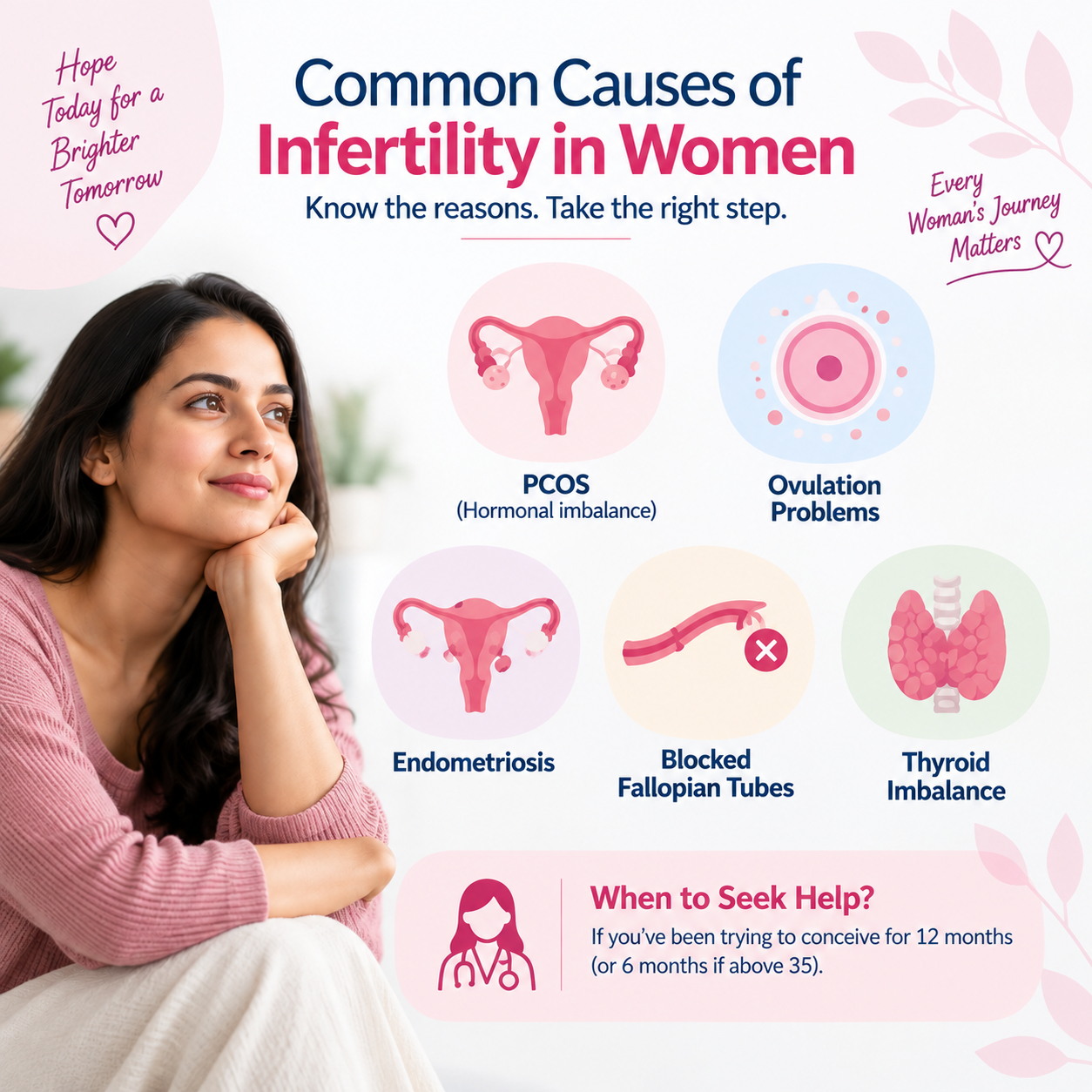
Trying to conceive is an important journey, but pregnancy does not always happen quickly. Female infertility can have several causes, including ovulation problems, PCOS, endometriosis, blocked fallopian tubes, hormonal issues, uterine conditions and age-related changes.
If you are looking for an infertility specialist in Ghaziabad or Noida, understanding these causes can help you know when to seek medical advice.
What Is Female Infertility?
Infertility generally means difficulty achieving pregnancy despite regular, unprotected sexual intercourse. Women under 35 are generally advised to seek an evaluation after 12 months of trying, while women aged 35 or older should consider evaluation after 6 months. Women over 40 or those with known fertility concerns may benefit from earlier consultation.
Common Causes of Female Infertility
1. Ovulation Problems
Regular ovulation is important for conception. Irregular or absent ovulation may be caused by PCOS, thyroid disorders, hormonal imbalances, significant weight changes or certain medical conditions.
2. PCOS and PCOD
PCOS is a common hormonal condition that can affect ovulation and periods. Symptoms may include irregular periods, acne, excess facial hair, weight changes and difficulty conceiving. With appropriate treatment, many women with PCOS can achieve pregnancy.
3. Blocked Fallopian Tubes
Blocked or damaged fallopian tubes can prevent the egg and sperm from meeting. Pelvic infections, previous surgery, pelvic inflammatory disease and endometriosis may contribute to tubal problems. An HSG may be recommended to evaluate the tubes.
4. Endometriosis
Endometriosis occurs when tissue similar to the uterine lining grows outside the uterus. It may cause painful periods, pelvic pain, pain during intercourse and difficulty conceiving.
5. Age-Related Fertility Changes
Female fertility generally declines with age, particularly after the mid-30s, as ovarian reserve and egg quality decrease. Women planning pregnancy at an older age may benefit from an early fertility consultation.
6. Uterine and Hormonal Problems
Fibroids, polyps, uterine abnormalities, thyroid disorders and other hormonal conditions can sometimes affect conception or implantation. Ultrasound and blood tests may help identify these conditions.
7. Lifestyle Factors
Smoking, excessive alcohol consumption, significant weight changes, poor nutrition, chronic stress and inadequate sleep may also affect reproductive health.
When Should You See a Fertility Specialist?
Consult a gynecologist or fertility specialist if:
- You have tried for 12 months if under 35.
- You have tried for 6 months if aged 35 or older.
- You are over 40 and planning pregnancy.
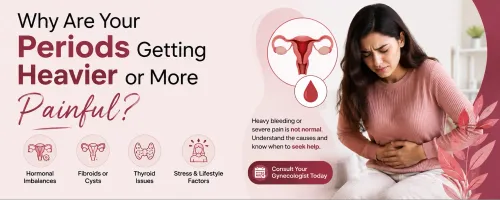
- Your periods are irregular or absent.
- You have severe menstrual or pelvic pain.
- You have PCOS, endometriosis or a history of pelvic infection.
- You have undergone reproductive surgery or experienced recurrent pregnancy loss.
Infertility can involve female factors, male factors, or both, so evaluation of both partners may be recommended.
Diagnosis and Treatment
Fertility evaluation may include medical history, ovulation assessment, hormonal tests, pelvic ultrasound, ovarian reserve testing and fallopian tube evaluation.
Treatment depends on the cause and may include medications, ovulation induction, IUI, laparoscopic or hysteroscopic procedures, and IVF when appropriate.
Infertility Treatment in Ghaziabad and Noida
Dr. Pooja Choudhary, Obstetrician, Gynecologist and Laparoscopic Surgeon, provides gynecology and fertility care for women in Ghaziabad, Indirapuram, Noida, Gaur City and Greater Noida West.
If you are experiencing irregular periods, PCOS, endometriosis or difficulty conceiving, timely consultation can help identify possible causes and guide you toward suitable treatment.
FAQs
Can PCOS cause infertility?
Yes. PCOS can interfere with regular ovulation, but appropriate treatment can improve the chances of pregnancy.
Can irregular periods affect fertility?
Yes. They may indicate irregular or absent ovulation.
When should I see a fertility specialist?
Generally, after 12 months of trying if under 35, or after 6 months if aged 35 or older.
Can infertility be treated?
Yes. Depending on the cause, treatment may include medication, ovulation induction, IUI, surgery or IVF.
Conclusion
Infertility can have many causes, but timely evaluation can help identify the underlying problem and appropriate treatment options. If you are looking for an infertility specialist in Ghaziabad or Noida, consult a qualified specialist for personalized fertility care.