
The right care route depends on your immediate goal: protecting the uterine lining, controlling acne or excess facial hair, reducing metabolic risk, preventing pregnancy, or trying to conceive. By matching your symptoms and test results to that goal, you can distinguish PCOS care from treatment for a separate ovarian cyst and know what to ask at a consultation.
Key takeaways
- Set your care goal: symptom control, regular cycles, or conception.
- Confirm PCOS with symptoms, examination, and targeted tests—not ultrasound alone.
- Use cycle-control treatment when pregnancy is not your immediate goal.
- Seek fertility guidance when conception is the priority or ovulation is irregular.
Start with the goal you need care to solve
Choose care by your immediate priority, not by an ultrasound label. To decide which polycystic ovarian disease care option is right, match your symptoms and plans to the route below.
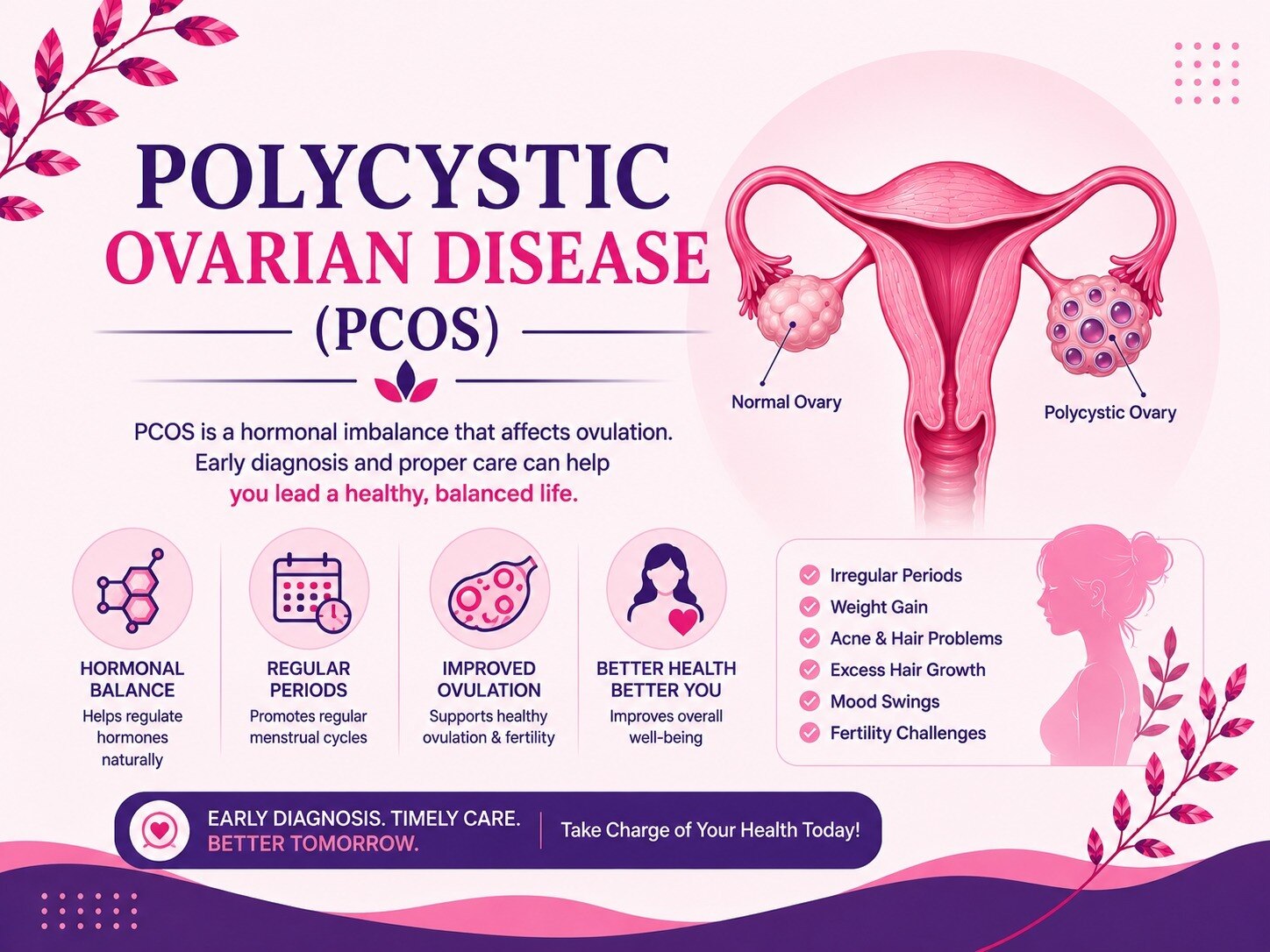
PCOD usually means polycystic ovary syndrome (PCOS), a hormonal and metabolic condition; the small follicles seen on a scan are not cysts that routinely need removal.
| Option | Best fit | Main purpose |
|---|---|---|
| Lifestyle and cycle monitoring | Mild symptoms, regular cycles, or a preference for non-drug care | Support weight, activity, sleep, nutrition, and symptom tracking |
| Combined contraception or cyclic progestogen | Irregular or absent periods when pregnancy is not the goal now | Regulate bleeding and protect the uterine lining; combined contraception also helps acne and excess hair |
| Metformin and metabolic care | Prediabetes, insulin resistance, weight-related risk, or abnormal glucose testing | Improve metabolic health; it is not a universal replacement for cycle or fertility treatment |
| Fertility evaluation | Difficulty conceiving because ovulation is infrequent | Confirm ovulation and begin an appropriate conception pathway |
| Cyst or pelvic-pain assessment | One-sided pain, sudden severe pain, or a separate ovarian mass | Investigate a cyst or another pelvic condition; cystectomy is not routine PCOS treatment |
A gynecologist can coordinate menstrual, androgen, glucose, and fertility assessment, then refer you to a reproductive endocrinology or fertility specialist when conception is the priority or initial treatment fails. A scan alone does not diagnose PCOS, so ask for a review of your history and relevant blood tests.
Confirm PCOS before choosing a treatment path
An ultrasound cannot diagnose PCOS by itself. In adults, clinicians usually look for two of three findings: irregular or absent ovulation, clinical or blood-test evidence of high androgens, and polycystic ovarian morphology, after excluding other causes.
The evaluation usually includes:
- A menstrual history: cycle length, skipped periods, bleeding pattern, acne, excess facial hair, weight changes, medicines, and pregnancy possibility.
- A pregnancy test when relevant.
- Blood tests for total or free testosterone, with thyroid-stimulating hormone and prolactin when symptoms suggest thyroid disease or raised prolactin. A 17-hydroxyprogesterone test may help exclude nonclassic congenital adrenal hyperplasia.
- Glucose assessment, preferably a 75-g oral glucose tolerance test, plus a lipid profile.
- Pelvic ultrasound when it will change management, rather than as an automatic diagnostic step.
| PCOS | Ovarian cyst | Another cause of irregular periods |
|---|---|---|
| Irregular ovulation plus androgen excess, with or without many small follicles | A distinct fluid-filled or solid ovarian growth, sometimes causing one-sided pain, pressure, or sudden severe symptoms | Thyroid disease, high prolactin, pregnancy, under-fuelling, excessive exercise, medication effects, or ovarian insufficiency |
| No single scan proves it | Ultrasound assesses size, appearance, blood flow, and follow-up needs | Targeted blood tests and clinical history identify the cause |
Small follicles seen in PCOS are not cysts that require removal. A large, persistent, complex, or painful ovarian mass needs separate assessment; cystectomy is not routine PCOS treatment.
Choose cycle and symptom control when pregnancy is not the immediate goal
If pregnancy is not your immediate goal, match treatment to the problem: use combined contraception for cycle and androgen control, cyclic progestogen for uterine protection, metformin for metabolic risk, and lifestyle care as the foundation.
| Option | Irregular bleeding | Androgen symptoms | Metabolic health |
|---|---|---|---|
| Lifestyle care | May improve cycle regularity through improved ovulation, but does not reliably prevent long gaps | Gradual benefit; limited direct effect on facial hair or acne | Regular activity, sustainable eating, sleep, and weight management improve risk factors |
| Combined contraception | Usually the strongest option for predictable bleeding | Often improves acne and excess hair over time | Does not replace glucose or lipid screening |
| Cyclic progestogen | Triggers scheduled bleeding and protects the endometrium after prolonged gaps | Little or no effect | No direct metabolic benefit |
| Metformin | May improve cycle regularity, especially with insulin resistance | Usually smaller benefit for hirsutism than treatments aimed at androgen effects | Most useful with impaired glucose tolerance, insulin resistance, higher BMI, or other metabolic risk |
Do not take combined contraception without a safety review covering blood pressure, migraine with aura, smoking, clotting history, liver disease, and other contraindications. Choose cyclic progestogen when estrogen is unsuitable or when the priority is endometrial protection rather than contraception.
Ask for glucose assessment even if you are young or not visibly overweight; a 75-g oral glucose tolerance test is the most accurate test in PCOS. Persistent, heavy, or unexplained bleeding needs examination rather than repeated prescriptions.
Choose a fertility pathway when conception is the priority
If conception is the priority, request a fertility-focused assessment rather than using treatment intended only to regulate bleeding. PCOS can prevent regular ovulation, but do not assume it is the only reason pregnancy has not occurred.
The assessment should cover:
- Ovulation pattern, menstrual history, age, and duration of infertility
- Semen analysis for the partner
- Tubal patency testing when indicated
- Pregnancy testing and blood tests for thyroid disease, prolactin abnormalities, glucose problems, and androgen excess
- Mental health, sleep, weight, blood pressure, and lipid assessment
For adults with PCOS who are not ovulating and have no other infertility factor, letrozole is the preferred first-line ovulation-induction medicine over clomiphene in the international evidence-based guideline.
| Option | What it means | When it applies |
|---|---|---|
| Letrozole | Medicine that encourages ovulation | First-line treatment for PCOS-related anovulatory infertility when no other factor is found |
| Clomiphene | An alternative ovulation-induction medicine | Considered when letrozole is unsuitable or unavailable |
| Gonadotropins or IVF | Injectable stimulation or assisted reproduction | Used after unsuccessful oral treatment, or sooner when age, tubal disease, semen results, or other factors warrant it |
Laparoscopic ovarian drilling is not routine PCOS treatment. It may suit selected cases after medication failure, but adhesions and loss of ovarian tissue are real risks.
When comparing a polycystic ovarian disease consultation near me with a polycystic ovarian disease specialist in Greater Noida, check qualifications, fertility evaluation, monitoring, and referral access—not the search-result label alone.
Know when you need a PCOS specialist, fertility referral, or cyst assessment
Your clinician choice should follow your immediate problem: PCOS symptom control, pregnancy, or a painful or persistent ovarian finding. A polycystic ovarian disease specialist in greater noida should be a qualified gynecologist who assesses periods, androgen symptoms, metabolic risk, and fertility rather than treating an ultrasound image alone.
Small follicles on a scan are not cysts that require removal.
Before booking a polycystic ovarian disease doctor in greater noida, check:
- The clinician reviews menstrual history and orders pregnancy testing when relevant, testosterone, thyroid-stimulating hormone or prolactin when indicated, glucose testing, and lipids.
- The clinic can arrange a fertility referral when conception is the goal, ovulation-induction treatment fails, or sperm and fallopian-tube factors also need assessment.
- The clinician explains whether you need a 75-g oral glucose tolerance test, follow-up testing, or ultrasound because it will change management.
- Dr Pooja Choudhary can help coordinate gynecological assessment and distinguish a PCOS plan from a cyst-focused referral.
Seek separate cyst assessment for persistent one-sided pain, increasing abdominal swelling, a complex or enlarging cyst, or pain during sex. Sudden severe pelvic pain with vomiting, faintness, fever, heavy bleeding, or possible pregnancy needs urgent care because torsion, rupture, or ectopic pregnancy requires prompt evaluation. A cystectomy is not routine PCOS treatment.
Related services
Gynaecology Services PCOS/PCOD Treatment in Indirapuram, Ghaziabad | Gaur City 2, Greater Noida West | Noida Polycystic Ovary Syndrome (PCOS), also known as Polycystic... View service → |
Infertility Services Treatment in Indirapuram, Ghaziabad | Gaur City 2, Greater Noida West | Noida If you are struggling to conceive due to irregular ovulation, Ovulation... View service → |
Frequently asked questions
How do I choose the right polycystic ovarian disease care option?
Start with your immediate goal: manage irregular cycles and symptoms, prepare for pregnancy, or assess a separate ovarian cyst. Your symptoms, test results, and pregnancy plans determine the appropriate pathway.
How is PCOS confirmed before treatment?
A clinician reviews your menstrual pattern, androgen-related symptoms, medical history, and examination, then orders targeted tests. An ultrasound finding alone does not confirm PCOS.
What care is suitable when pregnancy is not my immediate goal?
Cycle-control care can address irregular bleeding, acne, excess hair, and the risk of prolonged gaps between periods. The plan depends on your symptoms and health history.
When should I choose a fertility pathway for PCOS?
Choose fertility-focused care when you are trying to conceive or ovulation is infrequent. Assessment can identify ovulation problems and guide treatment or referral.
When do I need a PCOS specialist, fertility referral, or cyst assessment?
Seek specialist care for persistent symptoms, uncertain diagnosis, or treatment difficulties. Request fertility guidance when conception is the priority, and seek cyst assessment for a distinct or painful ovarian mass.
Related services
Obstetrics Services Preconception Care in Indirapuram, Ghaziabad Planning a pregnancy is one of the most important steps toward having a healthy baby. View service → |
Infertility Services Diagnostic Services Infertility Diagnostic Services in Indirapuram, Ghaziabad Accurate diagnosis is the first and most important step in successful fertility treatment. |
Contaceptive Services Contraceptive Advice & Family Planning Specialist in Gaur City, Greater Noida West, Noida, Indirapuram & Ghaziabad Contraception, also known as birth... View service → |