

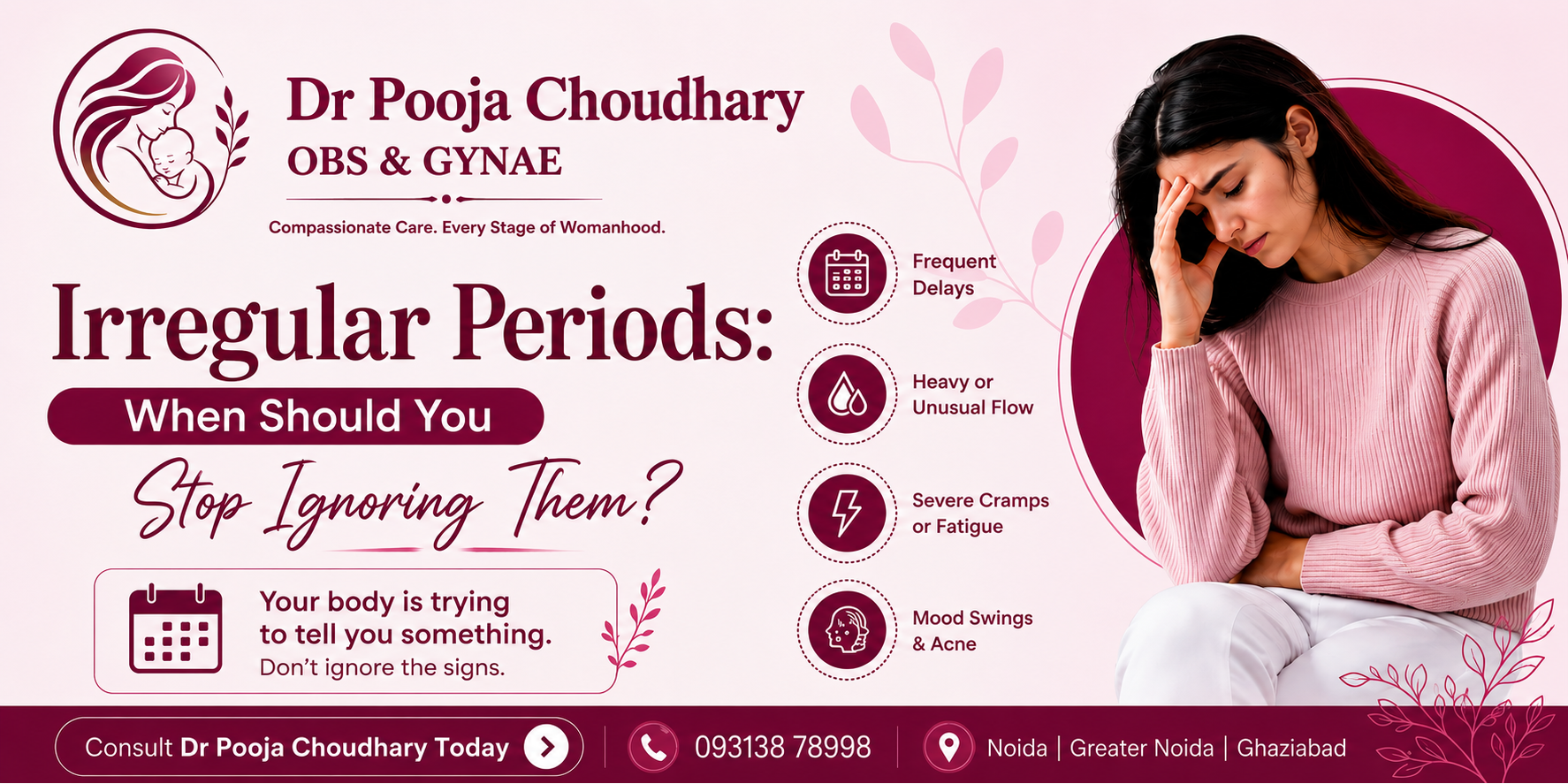
Periods don’t always arrive on the exact same day every month, and an occasional change is usually not a reason to worry. But if your periods are frequently irregular, very delayed, unusually early, or you start missing periods altogether, it may be time to understand what your body is trying to tell you.
What are irregular periods?
A menstrual cycle is generally considered irregular when the gap between periods varies significantly from month to month, or your periods repeatedly occur outside your usual pattern. Stress, changes in weight, intense exercise, illness and hormonal fluctuations can sometimes affect your menstrual cycle.
However, persistent irregular periods can also be linked to conditions such as PCOS, thyroid problems, hormonal imbalances or other gynaecological concerns.
Common causes of irregular periods
Some common reasons include:
PCOS: One of the common causes of irregular or missed periods.
Thyroid problems: Both an underactive and overactive thyroid can affect menstruation.
Stress: Long-term physical or emotional stress can interfere with hormones responsible for ovulation.
Weight changes: Sudden weight gain or weight loss may affect your cycle.
Perimenopause: Hormonal changes before menopause can make periods unpredictable.
When should you see a gynaecologist?
If irregular periods continue for several months, you frequently miss periods, experience very heavy bleeding, have severe period pain, or notice symptoms such as excessive hair growth, acne or unexplained weight changes, it is worth consulting a gynaecologist.
Your doctor may recommend a detailed medical history, examination, blood tests or an ultrasound depending on your symptoms.
Don't ignore a changing cycle
Your menstrual cycle can provide useful clues about your overall hormonal and reproductive health. An occasional late period may not be concerning, but repeated changes deserve attention.
If your periods have become consistently irregular, speak to a gynaecologist to understand the underlying cause rather than simply waiting for your cycle to return.